
A coffee cherry is the fruit of the coffee plant, with the coffee bean as its seed. Each layer, from the outer skin to the silverskin, affects processing and influences coffee development before roasting. Harvest ripeness sets the foundation for each lot’s quality.
This article explains the anatomy of a coffee cherry, how to assess ripeness, and how harvest decisions affect the final cup.
At Bali Origins, quality control begins when coffee cherries arrive for processing. Our certified team treats cherry selection and intake sorting as essential checkpoints because the fruit’s condition determines the finished coffee’s quality.
What Is a Coffee Cherry?
A coffee cherry is a small fruit, about the size of a cranberry, that grows on the coffee plant. It typically contains two seeds, known in the industry as coffee beans, though they are not botanically true beans.
Coffee flowers grow in clusters along the branches, and each pollinated flower becomes a cherry. Because flowering can last several weeks, unripe and overripe cherries often appear on the same branch. This uneven ripening requires careful harvesting to maintain consistent coffee quality.
Arabica and Robusta are the most widely cultivated coffee types. Liberica, grown in parts of Indonesia, produces larger cherries with thicker pulp. All coffee cherries have a similar structure, but differences in size, composition, and ripening affect harvest management.
Anatomy of a Coffee Cherry, Layer by Layer
From the outside in, a coffee cherry has six main layers. Each serves a different function, and processing determines how producers handle each layer.
| Layer | Botanical name | What it is | Role in processing |
| Skin | Exocarp | Thin outer skin that changes from green to red, yellow, or orange as the cherry ripens | Removed during pulping or dried with the fruit in natural processing |
| Pulp | Mesocarp | Soft, fleshy layer beneath the skin | Removed during pulping or dried with the cherry in natural processing |
| Mucilage | Pectin-rich layer | Sticky layer surrounding the parchment after pulping | Removed during washed processing, partly retained in honey processing, or dried with the fruit in natural processing |
| Parchment | Endocarp | Papery covering that protects each seed | Remains around the seed during drying in most methods and is removed during hulling |
| Silverskin | Spermoderm | Thin membrane wrapped directly around the seed | Mostly removed during milling; the remaining layer comes off as chaff during roasting |
| Seed | Endosperm | The coffee bean, containing carbohydrates, proteins, lipids, acids, and caffeine | Becomes green coffee before roasting transforms its aroma and flavor |
The skin, pulp, and mucilage form protective layers around the coffee seed. These layers contain sugars and other compounds that influence processing, especially if fruit remains on the bean during drying.
Parchment and silverskin protect the seed at different stages. Parchment shields the seed during drying and storage. Silverskin remains attached and mostly separates during roasting.
Roasting transforms compounds in the seed into coffee’s characteristic aromas and flavors. Its pre-harvest development, including cherry ripeness, is essential to the final cup quality.
Peaberries and Other Bean Variations
Most coffee cherries have two seeds that grow side by side, which is why regular coffee beans have a flat side. Sometimes only one seed grows inside the cherry. This single, rounder seed is called a peaberry.
Peaberries form when one ovule does not develop or a seed fails to grow because of genetic or environmental factors. They make up a small part of the harvest and are usually separated during grading.
It is still debated whether peaberries consistently taste sweeter than conventional beans. However, their rounded shape affects movement in the roasting drum. Separating them from flatter beans helps roasters manage each shape more consistently.
Some beans are also unusually large, small, or oddly shaped. Producers and processors sort these by grade and quality since bean size and shape can affect roasting uniformity.
What is a Peaberry?
A peaberry is a coffee cherry that develops only one seed instead of two. The single seed grows round, so roasters sort and roast peaberries separately to keep the roast even.
Ripeness: The Quality Ceiling of Every Lot
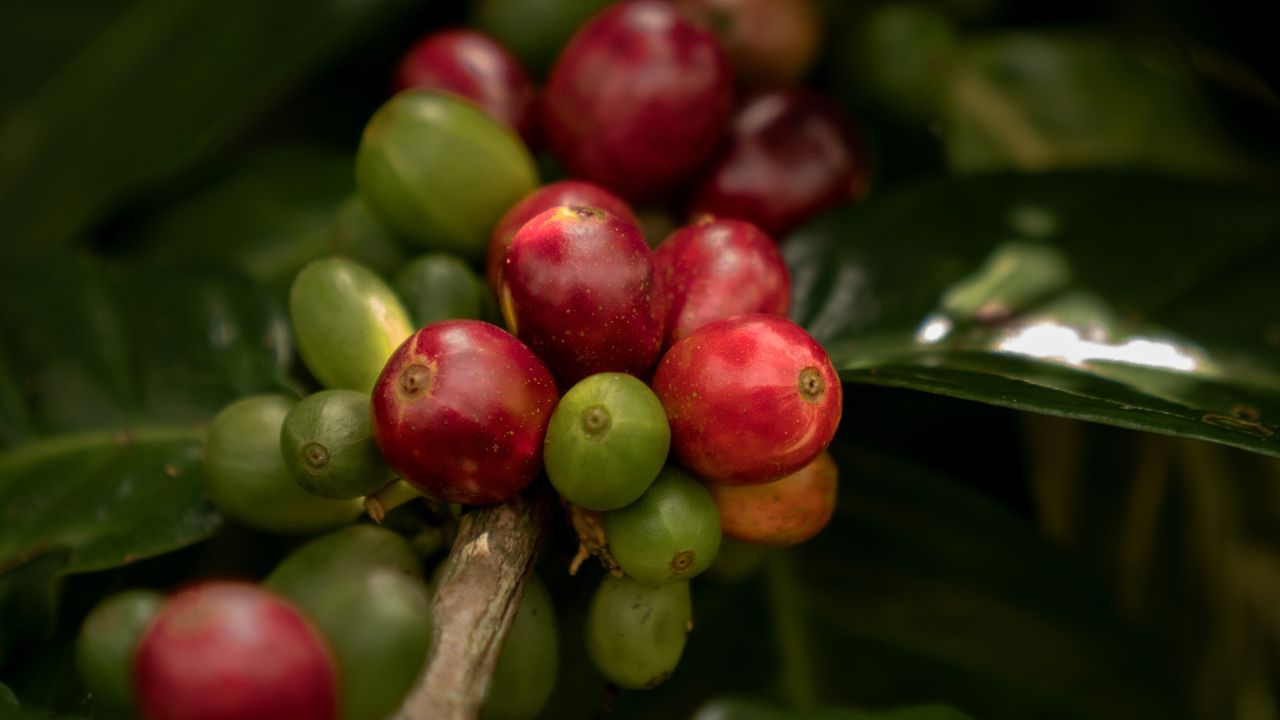
Coffee cherries take several months to ripen after flowering. As the fruit and seed develop, harvest timing is important. Picking cherries too early or too late can lower quality for processors and roasters.
- Unripe cherries: These are firm and green and may produce grassy, astringent, or underdeveloped cup characteristics. They contain less fruit sugar and can contribute to inconsistent lots.
- Partially ripe cherries: These show green and developing colors. Their sweetness and flavor are not fully developed, which can create sharp or unbalanced notes.
- Ripe cherries: These have reached their mature color and have soft, sweet pulp. Properly ripened cherries provide a strong foundation for balanced sweetness, acidity, and body.
- Overripe cherries: These can turn very dark, become wrinkled, or start drying on the branch. They often add heavy, muddy, or overly strong fruit flavors that reduce cup clarity.
Ripe cherries are usually red, but color depends on coffee type and variety. For example, Yellow Bourbon and Yellow Catuai are yellow when ripe. Producers check ripeness by looking at color, softness, and sweetness.
Some producers use a refractometer to measure soluble solids in cherry pulp. This provides another maturity indicator alongside visual and tactile assessment.
For specialty lots, selective harvesting targets cherries at optimal ripeness. In larger commercial harvests, sorting removes underdeveloped, damaged, and overripe fruit before processing.
What Is a Refractometer?
A refractometer measures how light bends as it passes through a liquid to estimate how much dissolved substance it contains. In coffee production, it measures soluble solids in coffee cherry pulp, helping producers assess cherry ripeness and decide the right time to harvest.
Harvest Decisions That Shape the Cup
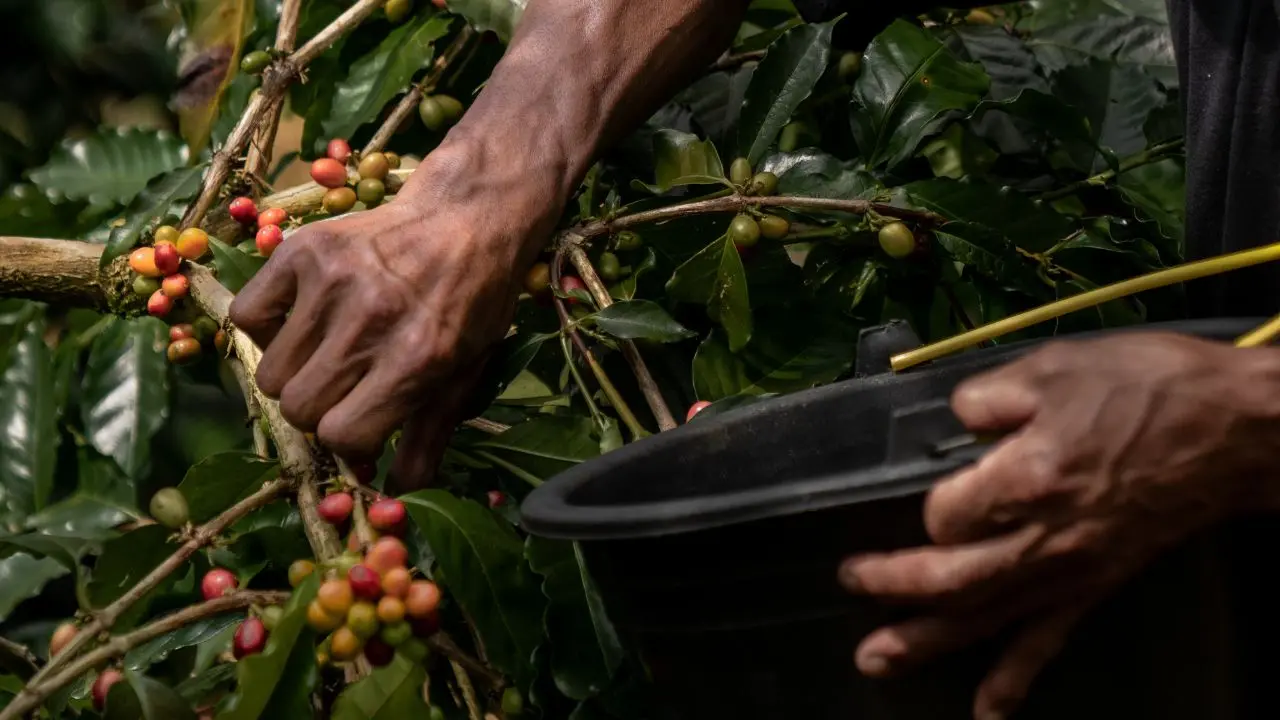
Because cherries on the same branch ripen at different times, the harvesting method directly affects the uniformity of the fruit collected.
Selective Picking
Pickers revisit trees multiple times during harvest, collecting only ripe cherries each time. This labor-intensive method yields more uniform lots and is common for specialty coffee.
Strip Picking
Pickers remove all cherries from a branch in a single pass, regardless of ripeness. This method is faster and requires less labor, but it requires extra sorting to meet quality standards.
Mechanical Harvesting
This approach is common on large farms with suitable terrain and equipment. Producers use machines to shake or strip cherries from trees, then sort the fruit to remove material that does not meet processing requirements.
Post-harvest sorting is essential regardless of harvesting method. Producers might float cherries in water to separate damaged, underdeveloped, or light fruit, then sort them by hand or machine to remove any visible defects.
Timely processing after picking is crucial. Cherries continue to change after harvest, so delays can affect flavor development and increase the risk of undesirable cup characteristics.
How Cherry Anatomy Connects to Processing
Each coffee processing method determines which cherry layers are removed before drying and which remain attached to the seed.
| Method | Removed before drying | Typical cup direction |
| Washed | Skin, pulp, and mucilage, through a controlled washing process | Clean, bright, with defined acidity |
| Honey | Skin and pulp; some or all mucilage stays on | Sweet and rounded, between washed and natural |
| Natural | The whole cherry remains intact during drying, with the fruit removed afterward | Pronounced fruit character, sweetness, and fuller body |
| Wet hulled | Skin, pulp, and mucilage, with the parchment removed while the bean is still moist | Full body, earthy or herbal notes, and typically lower perceived acidity |
Each coffee processing method determines which cherry layers are removed before drying and which remain attached to the seed.
The amount of fruit retained during drying affects processing conditions and cup characteristics. Natural processing dries the whole cherry intact. Honey processing retains mucilage after removing the skin and pulp. Washed processing removes mucilage before drying. Wet-hulled processing removes parchment earlier than conventional dry milling.
Ripeness matters for every processing method. In washed processing, removing the fruit before drying can make sharp flavors from underripe cherries stand out. With natural processing, the whole cherry stays on the bean, so picking ripe fruit and drying it carefully are needed to keep the taste clean and balanced.
Honey processing gives coffee a special mix of sweetness and body. How much mucilage stays on the bean shapes the final flavor. For more details, see our guide to honey-processed coffee.
Great Coffee Is Decided Before Processing Begins
Roasting and processing can enhance a coffee’s profile, but they cannot recover quality lost from poor cherry selection. For B2B buyers, consistency starts with careful harvesting, sorting, and handling at origin.
At Bali Origins, we source coffee from trusted plantations in Bali and Lombok. Our certified team uses intake sorting, controlled processing, and quality control checkpoints throughout production to deliver premium Indonesian coffee beans to wholesale partners.
We offer premium green and roasted coffee for roasters, distributors, and café chains seeking consistent quality and reliable supply. Contact the Bali Origins team to discuss available lots and request samples.
Coffee Cherry FAQs
A. What is a coffee cherry?
A coffee cherry is the small stone fruit of the coffee plant. It usually contains two seeds, which are processed, dried, and roasted to become coffee beans.
B. What are the layers of a coffee cherry?
From the outside in, the six main layers are the skin, pulp, mucilage, parchment, silverskin, and seed. Each layer serves a different function and is handled differently according to the processing method.
C. Is coffee a fruit or a bean?
Coffee comes from the seed of a fruit. The coffee plant produces cherries, and the seeds inside are commonly called beans because of their shape. Botanically, they are seeds, not true beans, which grow inside pods.
D. How do you know when a coffee cherry is ripe?
A ripe cherry has reached its mature color, feels slightly soft, and contains sweet, juicy pulp. Many varieties ripen red, while others turn yellow or orange. Producers assess color, softness, and sweetness to determine ripeness.
E. Is coffee cherry edible?
Yes. The ripe pulp is edible and typically tastes sweet with a slight tartness. You can also dry the skin and pulp to make cascara, a tea-like beverage with fruity notes.
F. What does a coffee cherry taste like?
A ripe coffee cherry typically tastes sweet, with juicy pulp and a slight tartness. Its flavor comes from the sugars and other compounds in the fruit surrounding the coffee seeds. Taste varies with ripeness and coffee variety.