
Coffee traceability matters to buyers who want clear details about where their coffee comes from and how it moves through the supply chain. This is especially important for coffee entering the European Union, as the EU Deforestation Regulation (EUDR) will take effect in 2026.
Traceability means more than knowing the country where coffee was grown. A well-documented coffee lot links to its farms or plots, producer information, harvest, processing, and supply chain movement. This lets buyers check each lot and meet EUDR requirements, giving them better insight.
This guide explains what coffee traceability looks like in practice, EUDR requirements, why Indonesian supply chains face particular challenges, and which records global buyers should request from suppliers.
At Bali Origins, we consider origin records part of our quality control. By sourcing directly at the plantation level, we minimize intermediaries, making the coffee and its documentation easier to track.
What Does the EUDR Require for Coffee?
Coffee is one of the products covered by the EU Deforestation Regulation. To access the EU market, coffee must comply with deforestation-free sourcing, legal production, and due diligence requirements.
The coffee must be:
- Deforestation-free: The coffee must have been produced on land that has not been subject to deforestation after 31 December 2020.
- Legally produced: Coffee must be grown and processed in accordance with all laws in its country of origin.
- Supported by due diligence: The responsible operator must submit required information and risk assessments through the EUDR Information System.
The regulation applies from December 30, 2026, for large and medium operators. Most micro and small operators have until June 30, 2027, depending on rules and exceptions.
Coffee buyers should ensure suppliers maintain reliable origin and supply chain records to support due diligence.
What Information Supports Coffee Traceability?
Coffee traceability connects each shipment to information collected earlier in the supply chain.
For EUDR-related coffee sourcing, important data can include:
- Farm plot geolocation, using point coordinates or polygon data as required
- Producer or plantation identity
- Country and region where the coffee is produced
- Harvest information and volumes
- Processing and milling records
- Lot numbers and chain of custody records
- Proof of land use history
- Documentation supporting legal production
- Supplier and operator information
Geolocation matters because EUDR due diligence needs details about the exact plots where coffee is grown. This information must stay connected to the coffee during processing and distribution.
Therefore, coffee traceability cannot be established only at export. The required information must be collected and maintained throughout earlier supply chain stages.
What Is Geolocation Data?
Geolocation data records where a farm plot sits on the map. A single point marks a small plot, while a polygon traces the plot’s boundary. Under the EUDR, this data must be linked to the exact lot it supplied.
Why Is Coffee Traceability Challenging in Indonesia?
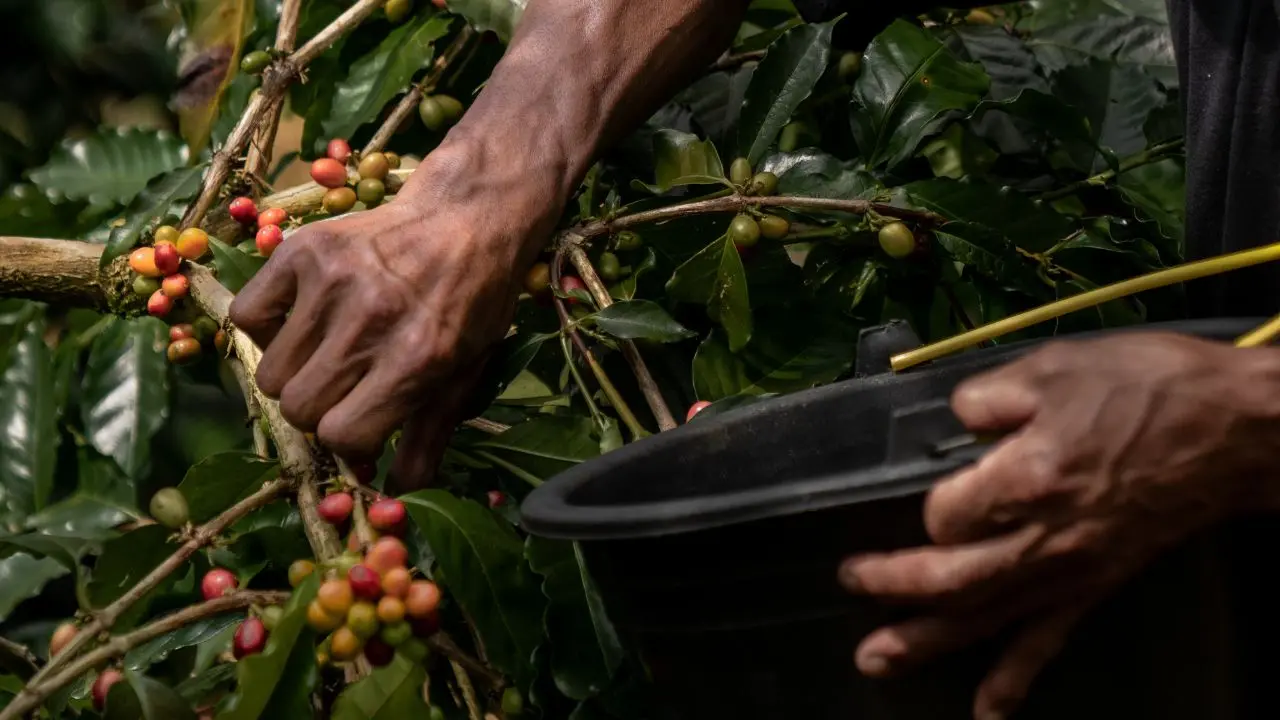
Indonesia is the world’s fourth-largest coffee producer. Most coffee is grown by smallholders and moves through several intermediaries, including collectors, producer groups, and processors, before export. With each extra handoff, the risk of missing or incomplete records goes up.
Farm mapping requires hands-on work at the origin. Producers must be identified, plots mapped, and information kept clear and usable as coffee is combined and processed.
Studies on EUDR implementation in coffee show that the large number of smallholder producers and the complex supply chains are significant challenges to achieving full traceability.
For buyers, this makes supply chain structure an important part of supplier evaluation.
Which Coffee Traceability Records Should Buyers Request?
Buyers should not assume that every supplier document qualifies as an EUDR document. Instead, they need to identify relevant information, understand its connections, and assess whether it meets compliance and sourcing requirements.
| Record | What it helps establish | What buyers can ask |
| Plot geolocation | Where the coffee was grown | Can you provide the relevant farm coordinates linked to this lot? |
| Producer identity | Who produced the coffee | Are producer or plantation records available for the contributing farms? |
| Land-use information | Whether the production area meets deforestation requirements | What information or monitoring supports the land-use history of these plots? |
| Harvest records | When and how much coffee was produced | Can the harvest information be linked to this lot? |
| Lot records | How coffee moved through processing | How is this lot identified from intake through processing and dispatch? |
| Chain of custody | Whether the lot remains connected to its source records | How do you prevent or document mixing with coffee from other sources? |
| Legal production records | Compliance with relevant local requirements | What documentation supports legal production in the sourcing area? |
| Certifications | Additional sustainability or sourcing information | Which certifications apply, and what information do they cover? |
Certifications can offer helpful extra information, but they do not replace the traceability and due diligence that EUDR requires.
What Is Chain of Custody in Coffee?
Chain of custody is the documented record of how a coffee lot moves through the supply chain while remaining connected to its original source. It helps buyers trace a lot from its contributing farms through processing and dispatch and identify how mixing with coffee from other sources is managed.
How Does Coffee Traceability Affect Supplier Selection?
Traceability is increasingly becoming part of the supplier evaluation process. Cup quality, price, availability, and processing capabilities remain important. Buyers sourcing for the EU also need to verify if a supplier can provide the origin information required for due diligence.
Suppliers who keep farm-level records and lot-level documentation make this process easier.
On the other hand, suppliers who offer only a certificate of origin, phytosanitary documents, or a sustainability certificate may leave traceability gaps that must be addressed before shipping to the EU.
The European Coffee Federation stresses the need to link farm geolocation with supply-chain information, instead of treating traceability as just an administrative task.
What Is a Phytosanitary Certificate?
A phytosanitary certificate is an official document issued by a plant protection authority that confirms a plant or plant-based product meets the destination country’s applicable plant health requirements. For green coffee shipments, it provides documentation that the coffee has been inspected and meets relevant phytosanitary requirements for international transport.
Why Coffee Traceability Matters Outside the EU?
EUDR is an EU regulation, but its effects can reach beyond shipments going to the EU.
A September 2026 study reported by Reuters found that coffee companies selling to both EU and non-EU markets often use EUDR-style traceability across their supply chains, rather than separate systems for each destination.
As suppliers update traceability systems, buyers in the United States, Asia, the Middle East, and other regions may receive more detailed origin information to support sourcing decisions.
This does not mean EUDR is a legal requirement for every non-EU buyer. Instead, it shapes how suppliers manage sourcing and documentation for different markets.
How Can Traceability Support Coffee Quality?
Coffee traceability is more than regulatory compliance. By connecting each lot to its origin and processing history, buyers gain useful details to explore differences between shipments or harvests.
Lot-level records help identify where variation occurs in the supply chain during sourcing, processing, storage, or handling. Over time, this supports more consistent purchasing and quality control.
Traceability is especially valuable for buyers seeking consistent coffee profiles across harvests.
For more information on maintaining consistency through post-harvest handling, see our guide to coffee quality assurance.
What Should Global Buyers Do Before Ordering Indonesian Coffee?
If you plan to source Indonesian coffee, check traceability requirements before preparing your shipment.
A practical checklist includes:
- Confirm if the supplier maintains farm- or plot-level origin records.
- Verify that geolocation data can be linked to the specific lot purchased.
- Ask how coffee from different producers is recorded and kept separate during processing.
- Request information on land use and deforestation monitoring, if applicable.
- Confirm which legal and sourcing documents are available.
- Confirm which certifications apply and what information they cover.
For EU-bound orders, clarify early who is responsible for EUDR due diligence and what information the buyer needs from the supplier.
Starting these discussions early lets both parties identify and address missing information before shipping.
Source Indonesian Coffee With Clearer Traceability
Clear origin records help buyers assess both compliance requirements and the consistency of the coffee they source.
At Bali Origins, we coordinate sourcing directly at the plantation level and manage coffee through controlled processing and post-harvest quality stages. By connecting sourcing and lot information, we give roasters, distributors, and coffee brands greater visibility into where their coffee comes from and how we handle it before shipment.
Traceability information for each lot varies by sourcing structure, buyer requirements, and destination market. For EU-bound coffee, discussing documentation requirements early helps ensure the relevant information is available before shipment.
Contact the Bali Origins team to discuss available Indonesian coffee lots, traceability documentation, sourcing areas, and shipment requirements.
Coffee Traceability FAQs
A. What Is Coffee Traceability?
Coffee traceability is the ability to track coffee through its supply chain and connect a finished lot with information about its origin, production, processing, and movement. For a highly traceable lot, buyers should be able to understand where the coffee was produced and how the relevant records remain connected to that lot as it moves through the supply chain.
B. What Does EUDR Require for Coffee?
EUDR requires relevant coffee placed on the EU market or exported from the EU to meet requirements concerning deforestation-free production, legal production, and due diligence. For coffee, supporting information can include farm plot geolocation, product and supplier information, evidence of deforestation-free production, and risk assessment information.
C. Do Coffee Buyers Outside the EU Need EUDR Compliance?
Not automatically. EUDR applies to specific operators, downstream operators, and traders involved in products covered by the regulation. However, non-EU buyers may still encounter EUDR-related traceability requirements because suppliers serving EU markets may standardize their sourcing and documentation systems across their wider customer base.
D. Is a Sustainability Certification Enough for EUDR?
No. A certification may provide useful supporting information, but it does not automatically replace the information and due diligence required under EUDR. Buyers should ask what information a certification covers and whether additional farm-level geolocation, land-use, and supply-chain records are available.
E. Why Is Coffee Traceability Important for Indonesian Coffee?
Indonesian coffee often moves through supply chains involving many smallholder producers and intermediaries. Maintaining a connection between individual production areas and the final coffee lot can therefore require significant coordination and recordkeeping. Strong traceability gives buyers greater visibility into both the origin and movement of their coffee.
F. How Does Bali Origins Support Coffee Traceability?
Bali Origins works with farming communities through direct sourcing relationships and maintains sourcing and post-harvest information for each coffee lot. Contact us to discuss the traceability documentation we can provide for Indonesian green coffee shipments.